


How to Remove Dip Powder Without Damaging Nails
A dip manicure should come off as cleanly as it went on. If you are wondering how to remove dip powder without leaving your natural nails thin, tender, or peeling, the answer is simple: patience matters more than force. Pulling, picking, or aggressively filing the product away may feel fast in the moment, but it can take layers of your natural nail with it.
A professional removal is always the most controlled option, especially if your nails already feel weak or you have a full set with extensions. But with the right tools, a gentle technique, and enough time, you can remove dip powder at home safely between appointments.
Why dip powder needs a careful removal
Dip powder is designed to hold up through busy weeks, workouts, coffee runs, and everything else your hands do. That durability comes from layers of resin, powder, activator, and top coat that cure into a hard finish. It is not meant to peel away like regular polish.
When dip begins to lift at the cuticle or chip at an edge, it can be tempting to tug at that loose corner. Resist it. What looks like product lifting can pull up the top layers of the natural nail plate, creating the rough, flaky texture many people blame on dip powder itself. Usually, the damage comes from removal that was too aggressive.
The goal is not to scrape every trace away. The goal is to let acetone soften the product, then gently guide it off with minimal pressure.
What you need to remove dip powder at home
Set yourself up somewhere comfortable with good light and a towel underneath your hands. Acetone can dry the skin and affect some surfaces, so choose your workspace thoughtfully.
For a smooth at-home removal, gather these essentials:
Pure acetone nail polish remover
A coarse nail file, around 100 to 180 grit
Cotton balls or cotton pads
Small pieces of aluminum foil
An orange wood stick or cuticle pusher
Cuticle oil and a rich hand cream
You may also want a small bowl for the warm-rice method, which can speed up the soak without submerging your fingers directly in acetone. Skip metal tools, sharp scraping, and electric files at home. An e-file can be excellent in trained hands, but too much pressure or the wrong bit can quickly over-file natural nails.
How to remove dip powder with foil wraps
Foil wraps are the cleanest, most reliable at-home method. Plan for about 25 to 40 minutes, depending on how many layers of product you have and whether you used a thick top coat.
File away the shine, not your natural nail
Start by gently filing the glossy top coat on each nail. You are breaking the seal so the acetone can reach the dip layers underneath. Keep the file moving and use light pressure. Once the surface looks matte and most of the shine is gone, stop.
Do not try to file all the way through the color. That is where many at-home removals go wrong. The acetone will do the real work.
Wrap each nail in acetone-soaked cotton
Soak a cotton ball or pad in pure acetone until it is wet but not dripping. Place it directly over the nail, then wrap a piece of foil around the fingertip to hold it in place. The wrap should feel secure, not painfully tight.
Repeat on all 10 nails. Start with your non-dominant hand so you can work more easily. Once both hands are wrapped, give yourself permission to pause. Scroll, listen to a podcast, or enjoy a quiet moment. Rushing this stage usually leads to scraping later.
Wait, then test one nail first
After 15 to 20 minutes, unwrap one finger and gently press the cotton onto the nail as you slide it away. The dip should look soft, wrinkled, or crumbly. Use an orange wood stick to lightly nudge the softened product off.
If it does not release with almost no effort, rewrap that nail for another five to 10 minutes. Never pry or dig at hard product. More soaking time is always kinder to your nails than more force.
Remove remaining residue gently
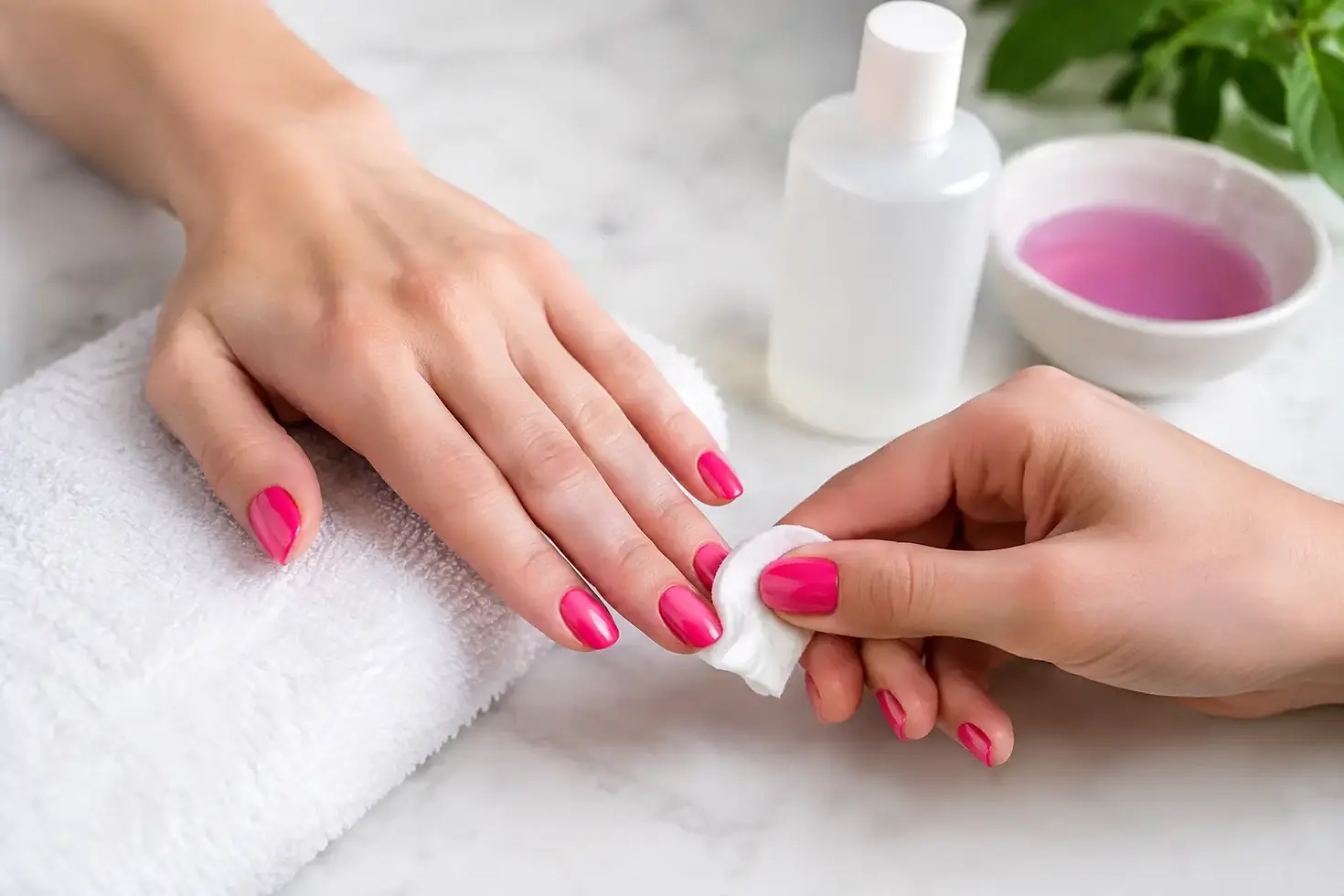
Once the bulk of the dip is softened, wipe the nail with a fresh acetone-soaked cotton pad. A little residue around the sidewalls or cuticle area is normal. Use the wood stick delicately only where the product has already softened.
Finish by washing your hands with mild soap and water. This removes acetone residue and gives you a clear look at the condition of your natural nails before you decide what comes next.
The warm-rice method: faster, with a few cautions
If foil wraps feel too slow, a warm-rice method can help acetone work faster. Fill a bowl with uncooked rice and warm it briefly so it feels comfortably warm, never hot. Place a smaller bowl or resealable bag with acetone inside the rice, then rest your fingertips in the acetone for about 10 to 15 minutes.
Gently rub your fingertips together in the acetone to encourage the softened dip to loosen. This method can be effective, but it is messier and exposes more skin to acetone. It is best for short, simple dip manicures rather than long nails, intricate art, or sensitive skin.
Do not heat acetone directly in a microwave or on a stove. Acetone is highly flammable. Warm the rice only, keep the room ventilated, and stay away from candles, cigarettes, or open flames.
What not to do when removing dip powder
The most common removal mistakes are also the ones most likely to leave nails looking damaged. Do not peel off lifting powder, even if it seems like it is ready. Do not use a credit card, tweezers, or sharp tool to wedge product away from the nail. And do not keep filing once you see natural nail underneath.
Avoid soaking your bare fingers in acetone for a long time if your skin is cracked, irritated, or especially dry. Foil wraps keep the solvent where it belongs and are usually more comfortable. If you have cuts around the cuticles, a nail infection, unexplained discoloration, or persistent pain, skip the DIY route and have a licensed nail professional assess your nails.
Give your natural nails a reset after removal
Acetone removes dip effectively, but it also removes moisture. Right after removal, your nails may look chalky or feel dry. That is temporary, and a little focused care goes a long way.
Massage cuticle oil into each nail, the cuticle area, and the skin along the sides of your fingers. Follow with a richer hand cream. If your nails feel flexible or fragile, keep them short for a week or two and wear gloves for dishes and cleaning. A clear strengthening treatment can be helpful, but it should not sting or make your nails feel tighter.
You do not necessarily need a long break from dip powder after every manicure. Healthy nails can continue with professionally applied and properly removed enhancements. It depends on your nail condition, your removal habits, and how your hands respond to regular acetone exposure. If you notice ongoing peeling, tenderness, or thinning, choose a natural-nail manicure for your next appointment and let your nail tech know what you have experienced.
When professional dip removal is worth it
At-home removal is practical when you have a straightforward dip manicure and the time to do it patiently. Professional removal is the better choice when you have extensions, thick layers, complicated nail art, severe lifting, or an upcoming event where you want your next set to look especially polished.
A trained nail professional can remove product with controlled techniques, check the health of the natural nail, and prep the surface correctly for your next manicure. That extra care matters when you want beautiful results without compromising nail comfort.
If your dip set is ready for a refresh, make the removal part of your self-care instead of an emergency task. At Touchpoint Nails + Spa, a clean, welcoming appointment can turn a grown-out manicure into a fresh start for hands that feel as good as they look.

Comments